


How to Achieve Fine Dining at Home: Step-by-Step Guide


Hosting a refined dinner at home can feel daunting when every detail impacts the experience. For ambitious cooks across London and the South East, the pursuit of restaurant-quality ambience, premium ingredients, and elegant presentation becomes as much art as science. Discover how thoughtful table settings, specialist sourcing, and meticulous plating come together to transform your home into the setting for an unforgettable meal, sidestepping common pitfalls that can mar the journey.
Table of Contents
Quick Summary
Key Point | Explanation |
1. Create a refined ambience | Focus on elegant place settings, soft lighting, and tasteful music to enhance the dining experience. |
2. Use high-quality ingredients | Source fresh, seasonal produce and premium ingredients to elevate flavours and authenticity. |
3. Structure a cohesive menu | Plan a multi-course menu with a clear theme, balancing richness and incorporating seasonal ingredients. |
4. Master plating techniques | Pay attention to clean presentation, using contrasting colours and artful arrangements to impress guests visually. |
5. Ensure attentive service | Prepare meticulously for service, maintaining a rhythm and professionalism to create a memorable dining experience. |
Step 1: Set the stage with elegant ambience
The environment you create matters as much as the food you serve. Your dining room becomes a theatre, and every detail contributes to the performance.
Start by considering your table as the centrepiece of the experience. Elegant place settings create immediate visual impact, transforming an ordinary dining table into something that feels refined and intentional.
Upgrade your tableware thoughtfully:
Use fine china or quality plates that complement your décor
Polish your silverware until it gleams—tarnish breaks the illusion
Ensure glassware is spotless and matches your aesthetic
Consider colour harmony between linens, plates, and glasses
Fresh flowers deserve prominence on your table. A single arrangement or scattered blooms add life and fragrance without overwhelming the space. Choose flowers that complement your menu and the season, whether that’s seasonal British blooms or refined imported varieties.
Ambience transforms a meal from sustenance into an occasion—guests arrive to a restaurant-quality environment, not a dining room that happens to serve food.
Software matters too. Play soft background music at low volume to fill silence without demanding attention. This layer of soundscape elevates the entire experience. Test your volume during setup so conversation flows naturally.
Personalised touches create memorable moments. Hand-written menu cards tell guests what they’re about to enjoy. Name cards at each place setting make individuals feel recognised and valued. These small gestures signal that effort went into their experience.
Lighting shapes everything. Dim overhead lights and rely on candles or low-level accent lighting to create warmth and intimacy. This isn’t about darkness—it’s about softness replacing harsh brightness.
Professional tip: Set your table the morning before service and photograph it—this lets you spot adjustments before guests arrive, ensuring everything aligns with your vision.
Step 2: Source and select premium ingredients
Your menu’s success depends entirely on ingredient quality. This is where the real work of fine dining begins, and frankly, it’s where most home cooks stumble.
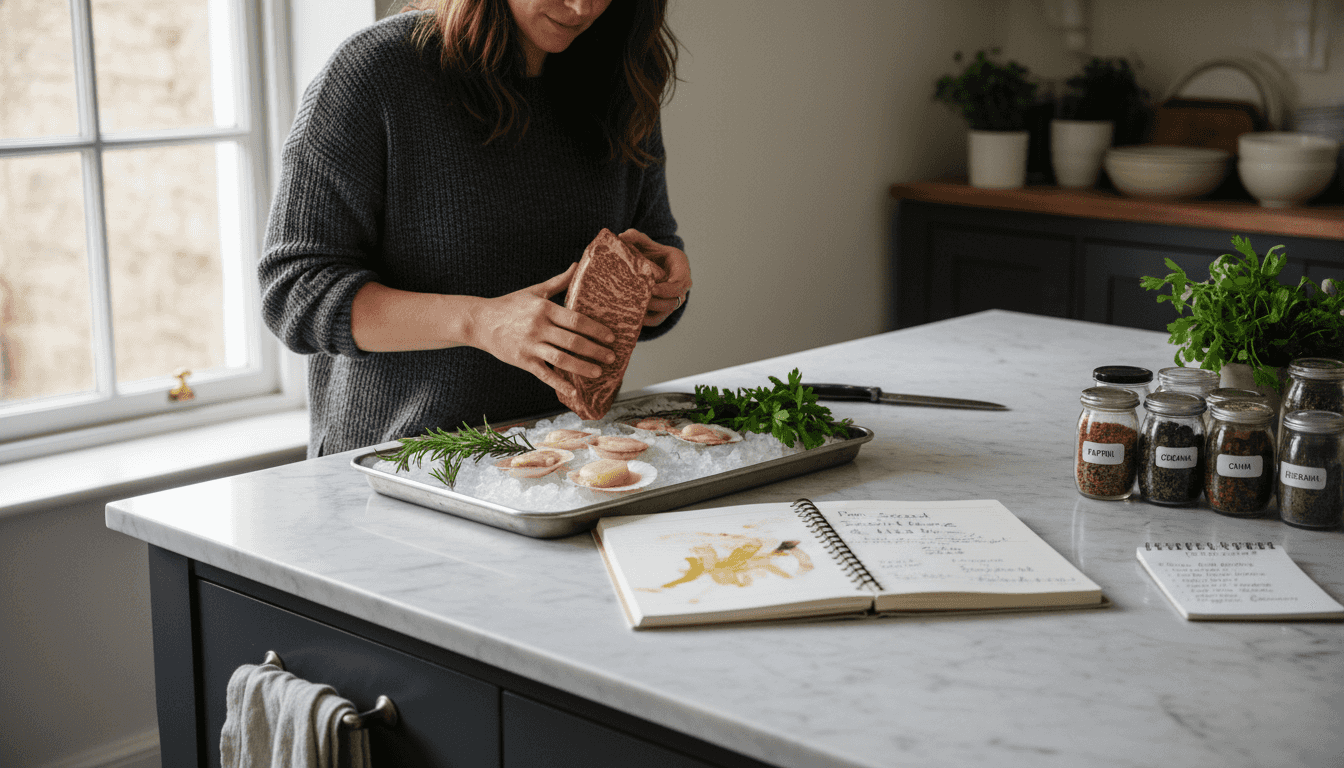
Start by understanding what provenance means in practical terms. Know where your ingredients come from, who produced them, and how they were handled. Premium ingredient sourcing requires building relationships with suppliers who share your standards. In London and the South East, you have access to exceptional farmers’ markets, specialist fishmongers, and butchers who know their craft.
Build your supplier network:
Identify local farmers’ markets for seasonal vegetables and fruits
Find a trusted fishmonger who sources sustainable seafood
Develop a relationship with a butcher who understands dry-ageing and butchery cuts
Connect with specialist importers for ingredients you can’t source locally
Ask suppliers about provenance, harvest dates, and handling methods
Freshness isn’t negotiable. Visit your fishmonger on the morning of service for seafood. Meat should be purchased 24 to 48 hours before cooking to allow proper ageing. Vegetables peak within 48 hours of harvest, so time your shopping accordingly.
Sustainable and ethical sourcing matters because your guests will taste the difference. Animals raised well and vegetables grown responsibly simply taste superior.
When selecting specific items, trust your senses. Smell fish—it should smell like ocean, not ammonia. Check meat for colour and marbling. Press vegetables gently; they should feel firm, never soft or bruised.
Authenticity strengthens your menu. If you’re cooking French cuisine, source French butter and cream. Italian pasta demands Italian flour. These details create texture and flavour profiles that shortcuts cannot replicate. Your guests may not consciously register these choices, but their palates will register the quality gap between authentic and approximated ingredients.
Storage matters as much as sourcing. Keep seafood on ice, store meat on the lowest shelf of your refrigerator, and use fresh herbs within 24 hours of purchase.
Professional tip: Order premium ingredients two to three days before service to confirm availability and build in backup options if your first choice isn’t perfect on the day.
Step 3: Craft and execute a sophisticated menu
Your menu tells the story of your evening. It sets expectations, establishes rhythm, and transforms individual dishes into a narrative arc that guests experience over several hours.
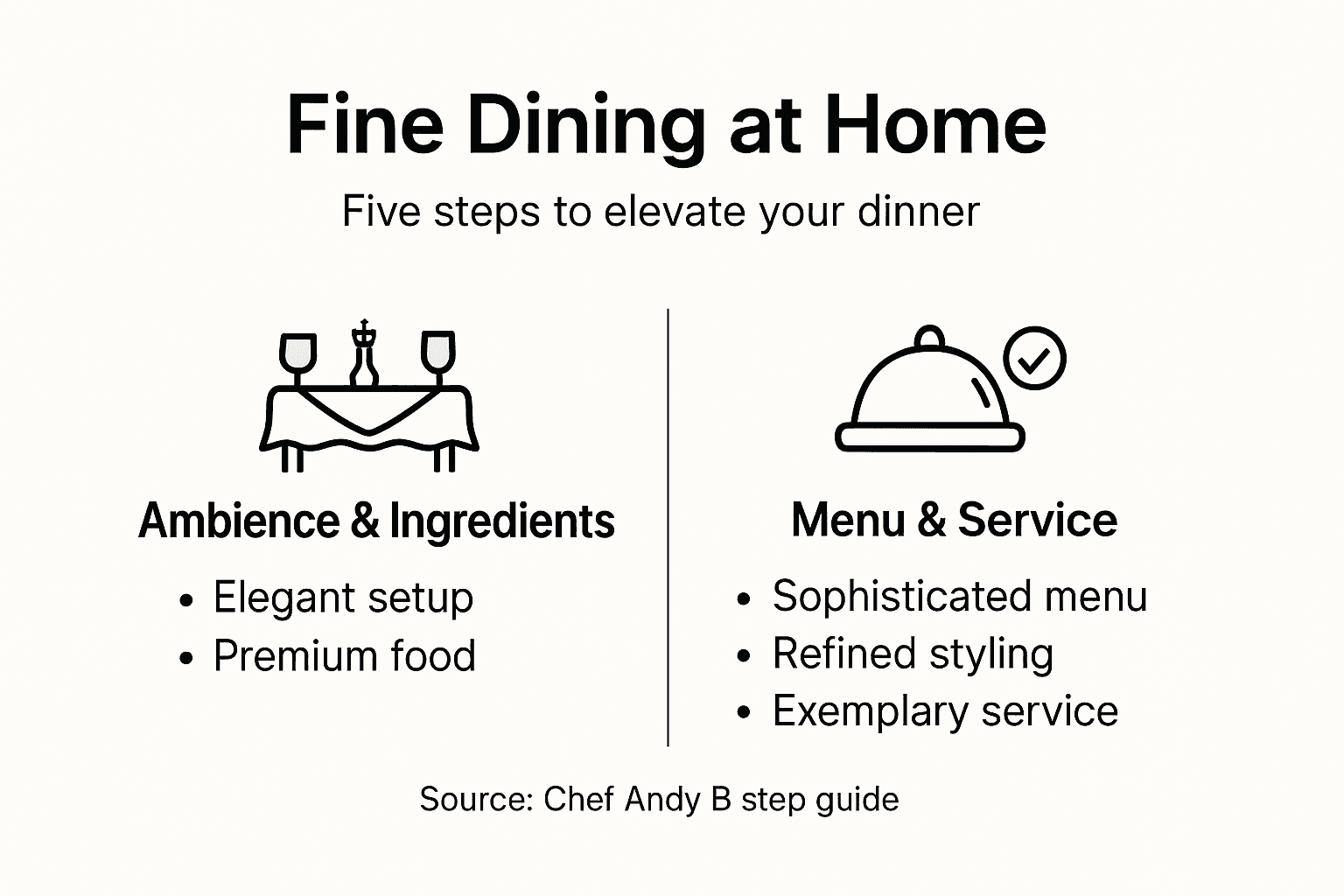
Begin with a clear theme or concept. This might centre on a specific cuisine, a seasonal focus, or even a particular ingredient. Your theme guides every decision that follows, from ingredient selection to wine pairings. A cohesive menu feels intentional rather than random.
Structure your menu thoughtfully:
Open with an amuse-bouche or light starter to awaken the palate
Progress through courses with increasing richness and complexity
Include a palate cleanser between major courses if serving more than four courses
Conclude with dessert that echoes flavours from earlier courses
Plan smaller portions than restaurant meals, allowing guests to enjoy multiple courses
Seasonal ingredients are non-negotiable for fine dining. Spring calls for asparagus and lamb. Summer demands tomatoes and soft fruits. Autumn brings mushrooms and game. Winter suits root vegetables and preserved elements. When you align your menu with seasons, flavours peak and sourcing becomes easier.
Multi-course dining at home should feel like an experience unfolding, not a marathon of eating. Each course builds anticipation for what comes next.
Experimenting with gourmet techniques separates fine dining from competent cooking. Consider sous-vide preparation for proteins, spherification for unexpected textures, or precise temperature control for vegetables. These techniques demand practice, so test each dish before service day.
Wine pairing elevates everything. Match wines to the progression of your courses, starting lighter and building toward fuller-bodied selections. If some guests prefer non-alcoholic options, luxury dining experiences often feature artisanal soft drinks, sparkling waters, and carefully selected juices alongside wine selections.
Timing matters more than you’d expect. Plan your menu so dishes finish cooking in sequence. Calculate prep times backwards from service, identifying which elements can be prepared ahead and which demand last-minute assembly. Write out a detailed timeline and rehearse it.
Balance your courses across flavours and cooking methods. Don’t serve two fish courses. Avoid repeating spice profiles. Vary textures between creamy, crunchy, and tender elements throughout the meal.
Professional tip: Plate each course identically for all guests, plating in the kitchen rather than at the table—this ensures consistent presentation and allows you to control timing with precision.
Step 4: Present dishes with refined styling
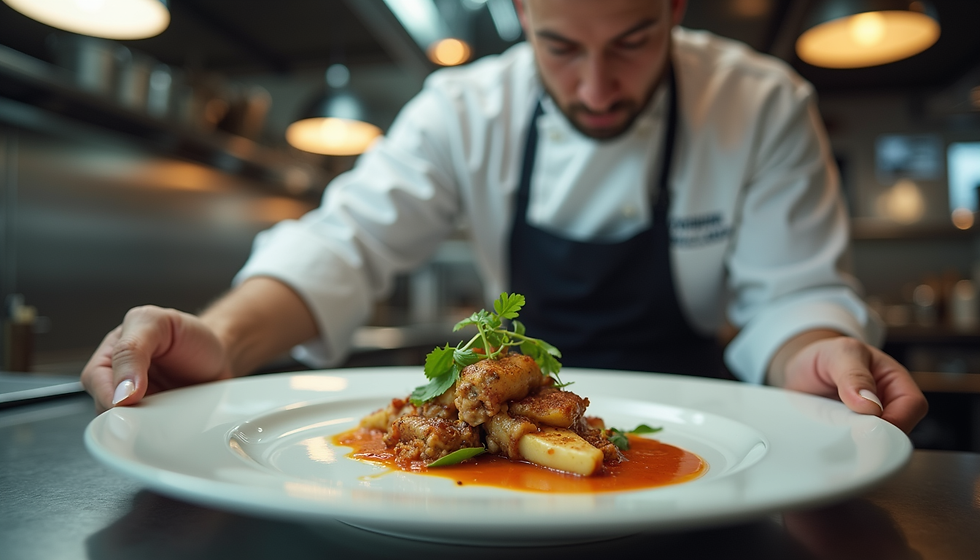
Plating transforms cooking into art. The moment a dish arrives at the table, guests form judgements based on visual presentation before they taste a single bite. This is where technique meets creativity.
Start with the fundamentals of clean plating. Every element on the plate should have purpose. Remove unnecessary garnishes and focus on colour contrast, negative space, and balance. A white plate provides the best canvas for most dishes, allowing colours to pop without competition.
Uniform knife cuts create visual harmony. Whether you’re slicing vegetables, portioning proteins, or cutting garnishes, consistency matters enormously. Uniform knife cuts and careful arrangement contribute directly to refined styling that guests immediately recognise as professional.
Master these plating principles:
Use odd numbers when positioning elements (three pieces rather than two or four)
Position taller components toward the back of the plate
Leave white space on the plate rather than covering every millimetre
Apply sauces with intention, not as afterthought drizzles
Keep garnishes minimal and edible
Colour provides your strongest visual tool. Aim for contrasting colours that complement rather than clash. A bright green herb oil against white fish and purple beet purée creates visual interest. Monochromatic plating can work, but requires exceptional technique to avoid appearing bland.
Plating is the final handshake between chef and guest. It communicates care, precision, and respect for their experience.
Specialised plating tools elevate your work. A squeeze bottle applies sauces with control. Tweezers position delicate garnishes without fingerprints. Offset spatulas transfer items cleanly. Ring moulds create perfectly shaped components. You needn’t spend a fortune, but invest in basic tools that feel good in your hands.
Portioning matters as much as presentation. Restaurant-quality plating means smaller, more elegant portions. A three-ounce piece of fish arranged thoughtfully beats a haphazard six-ounce portion. This also allows guests to enjoy multiple courses without overwhelming their palates.
Temperature affects presentation. Plate your dishes on warm plates—this keeps food at proper eating temperature and helps sauces flow naturally. Cold plates cause oils to congeal and sauces to sit sluggishly.
Garnishes should taste as good as they look. Microgreens, herb oils, edible flowers, and crispy elements add texture and flavour. Avoid purely decorative touches that guests must remove to eat.
Professional tip: Plate dishes in your kitchen moments before serving, then carry them directly to guests—this maintains temperature, prevents jostling, and ensures consistent presentation across all plates.
Step 5: Ensure exemplary service standards
Service quality determines whether guests remember your dinner as outstanding or merely competent. The food matters, but flawless execution separates fine dining from casual entertaining.
Begin with mise en place, the French concept of having everything prepared and in its proper place. Set your table hours before guests arrive, check place settings for alignment and spacing, and ensure all serving equipment is within arm’s reach. This preparation allows you to focus entirely on guests rather than hunting for items mid-service.
Fine dining service etiquette demands attention to detail that most home cooks overlook. Formal table settings follow strict conventions. Forks sit left of the plate, arranged by course sequence from outside inward. Knives and spoons go right, blades facing inward. Glasses rest above the knife. This arrangement removes anxiety from guests unsure which utensil to use.
Master these service fundamentals:
Serve from the left, clear from the right (this became standard for practical reasons)
Pour wine from the right side of each guest
Never let a glass empty completely before refilling
Clear plates only when every diner has finished their course
Present each course promptly without rushing
Timing creates rhythm throughout the meal. Pace courses approximately 20 to 30 minutes apart, allowing conversation and digestion between courses. Monitor when guests finish eating, then clear plates efficiently without hovering or interrupting dialogue.
Attentive service means anticipating needs before guests voice them, yet remaining invisible rather than intrusive.
Handling wine service professionally elevates the entire experience. Present the bottle to guests, show the label, open it gracefully, and pour a taste for approval before serving everyone. Use a wine glass cloth to prevent drips on the tablecloth. Hold glasses by the stem, never the bowl, to avoid fingerprints.
Maintain composure throughout service. If something spills or breaks, address it calmly and discreetly without making guests uncomfortable. Replace items immediately and continue service as if nothing happened. Guests take emotional cues from you.
Stay alert to dietary preferences or allergies you documented during the invitation. Ensure appropriate alternatives arrive without fanfare. Professionalism means these adaptations feel seamless rather than special accommodations.
Clear used plates strategically. Once the majority of guests finish, begin clearing. Never rush guests who eat slowly. Stack plates logically, carrying no more than four at once to maintain balance and elegance.
Professional tip: Rehearse your service sequence the night before, timing each course and identifying potential bottlenecks so you’re confident and relaxed when guests arrive.
Below is a summary comparing the key elements that distinguish a fine dining home experience from casual dinner parties:
Aspect | Fine Dining at Home | Typical Dinner Party |
Menu Structure | Multi-course, with paired drinks | Single main with sides |
Ingredient Sourcing | Specialist markets & provenance | Standard supermarket shop |
Ambience | Planned lighting, music, décor | General home environment |
Presentation | Artistic, uniform plating | Serve-yourself or mixed style |
Service | Formal, attentive, synchronised | Informal, self-service common |
Table Setting | Elegant, coordinated, proper | Mismatched, informal often |
Preparation | Detailed timeline and rehearsal | Minimal, on-the-spot prep |
Here is a concise reference of common fine dining mistakes at home and how to avoid them:
Mistake | Why It Happens | Effective Solution |
Rushed table setup | Last-minute preparations | Set table early and review layout |
Mismatched glassware | Incomplete sets or oversight | Choose matching glassware in advance |
Dull or tarnished cutlery | Neglected maintenance | Polish cutlery before guests arrive |
Room too bright or too dark | Poor lighting planning | Test lighting night before |
Underwhelming ingredient quality | Supermarket reliance | Source from specialist suppliers |
Portion sizes too large | Restaurant habits at home | Plan smaller, multi-course portions |
Chaotic course timing | Lack of clear timeline | Write and rehearse a service schedule |
Plating looks amateur | Little practice or wrong tools | Test plating and invest in basics |
Forgotten dietary requests | Inadequate guest notes | Confirm all requirements ahead |
Over-attentive or absent service | Nervousness or distraction | Focus on calm, watchful hosting |
Elevate Your Fine Dining Experience with Professional Expertise
Creating an exquisite fine dining atmosphere at home demands attention to detail from ambience to ingredient sourcing and impeccable presentation. If you find yourself grappling with challenges like perfectly timed courses, sourcing premium ingredients with authentic provenance, or achieving that flawless plating and service standard described in the guide, you are not alone. These are common pain points that transform a good dinner into a stunning multi-sensory experience.
Experience seamless sophistication with Chef Andy B, who brings over 26 years of culinary mastery serving Royalty and VIPs. From bespoke menus crafted with provenance-rich ingredients to refined plating and attentive professional service, every element is designed to exceed your expectations. Discover how effortless fine dining at home or for luxury events in Hampshire, London, and beyond can be by exploring the Chef Andy B bespoke dining services.
Transform your next dinner into an unforgettable occasion with tailored, high-end dining created just for you. Visit Chef Andy B now and take the first step towards relaxing and enjoying a perfectly executed fine dining experience without the stress. For insights on elevating your culinary events further, explore additional tips on luxury dining experiences. Your impeccable dining journey begins here.
Frequently Asked Questions
How can I create an elegant ambience for fine dining at home?
To create an elegant ambience, focus on your table setting, lighting, and soft background music. Set the table with quality tableware, use dim lighting with candles, and curate a playlist of soft music for a refined atmosphere.
What types of ingredients should I source for a fine dining menu?
Source premium ingredients by establishing relationships with local farmers, fishmongers, and butchers who emphasise quality and sustainability. Prioritise freshness—visit markets to select the best seasonal produce before planning your menu.
How do I structure a sophisticated multi-course menu?
Structure your menu by opening with light starters, progressing to richer dishes, and concluding with dessert that ties back to earlier flavours. Include palate cleansers and plan smaller portions to maintain a dining rhythm across courses.
What are essential plating techniques for fine dining dishes?
Essential plating techniques include using clean, balanced plating, uniform knife cuts, and minimal but intentional garnishes. Apply sauces thoughtfully and aim for contrasting colours to elevate visual appeal.
How should I ensure exemplary service during my fine dining event?
Ensure exemplary service by preparing everything in advance and adhering to formal table service etiquette. Practice serving techniques, maintain a steady pace between courses, and anticipate guests’ needs to provide a seamless experience.
What common mistakes should I avoid when hosting a fine dining experience?
Avoid common mistakes like rushed table setups, mismatched cutlery, and improper portion sizes. Plan your dinner timeline in advance, ensure consistent plating, and confirm dietary preferences with guests beforehand.
Recommended
Comments