


Private Chef Jobs UK: How to land private chef jobs uk in 2026

The world of private chef jobs in the UK is absolutely buzzing right now. We're seeing a huge spike in demand, and it’s all being driven by high-net-worth individuals who want something more than a restaurant can offer. This isn’t just about having someone cook for you; it's a real shift towards privacy, completely personalised menus, and health-first cuisine right in your own home.
Why the UK Private Chef Market Is Booming

The culinary scene is definitely changing. More and more top-tier chefs are leaving the relentless pace of restaurant kitchens behind for the world of private households. And why wouldn't they? The clients in this space value discretion and a tailored service, something the public-facing nature of even the finest restaurants just can't match.
Make no mistake, this isn't some passing fad; it's a serious economic movement. The UK's private chef market is already worth around USD 607.0 million, and it's on track to hit an estimated USD 873.6 million by 2030. That kind of growth points to a fundamental change in how affluent families think about their food, their health, and how they entertain.
The New Expectations of Elite Clients
Today’s clients aren't just looking for a good cook. They’re hiring a culinary manager who can oversee every aspect of their food life. The job has evolved, and it now requires a unique mix of skills that go way beyond just being great on the stove.
So, what's driving this? A few key things:
Absolute Discretion and Privacy: High-profile clients need someone who can operate seamlessly and silently within their home. It's about being invisible but indispensable.
Hyper-Personalised Nutrition: There’s a massive focus on health and wellness. Clients need chefs who are experts in specific dietary protocols, whether that’s plant-based, keto, or low-FODMAP.
Sustainable and Ethical Sourcing: People want to know where their food comes from. Sourcing local, organic, and ethically produced ingredients isn't a bonus anymore—it's often a requirement.
Effortless Entertaining: The expectation is that you can handle everything from a quiet family dinner to a large social gathering with flawless execution, causing minimal fuss for the client.
This shift means that chefs are no longer just service providers but trusted members of a household's inner circle, responsible for the health and well-being of the family.
Positioning Yourself for Success
If you want to stand out in this competitive field, you need to match your skills to these modern demands. It's not enough to be a fantastic chef. You have to show you understand the lifestyle and the unspoken rules of the world you’re stepping into.
By building up your knowledge in areas like advanced nutrition and demonstrating impeccable professionalism, you can position yourself as the perfect fit for the best private chef jobs UK has to offer. You can get ahead of the curve by exploring our insights into the future of the private chef industry and what to expect.
The Skills That Set Top Private Chefs Apart

Sure, your culinary training got you this far. But to really succeed in the world of private chef jobs in the UK, you need to bring a lot more to the table than just knife skills.
High-net-worth clients aren’t just hiring a cook. They’re inviting a key professional into their home, into their inner circle. That demands a unique blend of technical mastery and serious people skills.
Your cooking ability is the baseline—the absolute minimum ticket to the game. What really makes a private chef stand out is the ability to combine that with skills that make a client’s life easier, healthier, and just plain better. This is how you go from being a good chef to an indispensable one.
The Non-Negotiable Soft Skills
These are the personal traits that will make or break your career in a private household. You won’t learn them in culinary school, but believe me, clients and their agents are watching for them.
Unflappable Adaptability: Imagine this: the client announces an impromptu dinner party for twelve. You have three hours. A top private chef doesn't panic. They calmly take stock of the pantry, pivot the menu, and deliver a flawless meal without breaking a sweat.
Absolute Discretion: You’re going to overhear things—private family conversations, business calls, the works. The ability to be a vault is non-negotiable. It’s often called ‘invisible service’ for a reason: be present and attentive, but never intrusive.
Exceptional Communication: This means listening more than you talk. It’s about picking up on subtle cues, confirming preferences clearly and concisely, and building a solid, professional rapport with your principals and the rest of the household staff.
High-Demand Technical Competencies
Beyond the stove, clients expect you to run the culinary side of their home like a small, efficient business. This means your expertise has to stretch into nutrition, finance, and logistics.
For instance, a deep knowledge of complex diets isn't a niche skill anymore; it's a core requirement. Clients often follow very specific regimens—from ketogenic and low-FODMAP to strictly plant-based—and they expect you to be the expert. You'll need to create menus that are varied, delicious, and nutritionally perfect within those strict lines.
A great private chef doesn’t just follow a client’s dietary requests. They anticipate their needs, introduce them to new and exciting flavours within those boundaries, and actively contribute to their health and wellness goals through food.
On top of that, you’ll be managing a significant household budget. Sourcing the finest ingredients requires meticulous record-keeping, sharp supplier negotiations, and the ability to deliver exceptional quality without overspending. An understanding of wine pairings and cellar management can also be a massive plus, taking the dining experiences you create to a whole new level.
If you want to get a better sense of the sheer variety of work involved, it's worth exploring the varied and exciting roles of private chefs to appreciate the true scope of the job.
Crafting a Portfolio That Captures HNW Attention

Let’s be direct: your portfolio is your single most important marketing tool. For high-net-worth (HNW) clients and the agents who vet candidates for them, a standard restaurant CV just won’t land. They aren’t just hiring your ability to cook; they are investing in your professionalism, your aesthetic, and your innate understanding of their world.
Think of your portfolio less as a list of past jobs and more as a luxury brochure. You're selling a bespoke culinary service. Every single element, from the words on your CV to the quality of your food photos, needs to scream elegance, precision, and a quiet confidence that you belong in their home.
Moving Beyond the Standard Chef CV
Your CV needs a total reframe to speak the language of private service. Ditch the generic templates – they’re your enemy here. Customisation is everything. Instead of listing restaurant duties, you need to highlight the skills that resonate with this exclusive market.
Focus on demonstrating how you’ve solved the unique challenges that come with running a private household kitchen:
Logistical Expertise: Did you manage provisioning for a superyacht sailing through the Med? Detail that experience with international sourcing and customs.
Multi-Property Management: Ever worked for a family with a primary home in London and a ski chalet in the Alps? Emphasise your ability to set up, stock, and manage multiple kitchens seamlessly.
Specialised Environments: Showcase any work on private jets or remote estates. This proves you can deliver excellence no matter how challenging the conditions.
The goal is to show you've done more than just cook in a static kitchen. You have managed complex culinary logistics in demanding, high-stakes environments. This positions you as a reliable, versatile, and ultimately indispensable asset for an elite household.
The Power of a Visual Portfolio
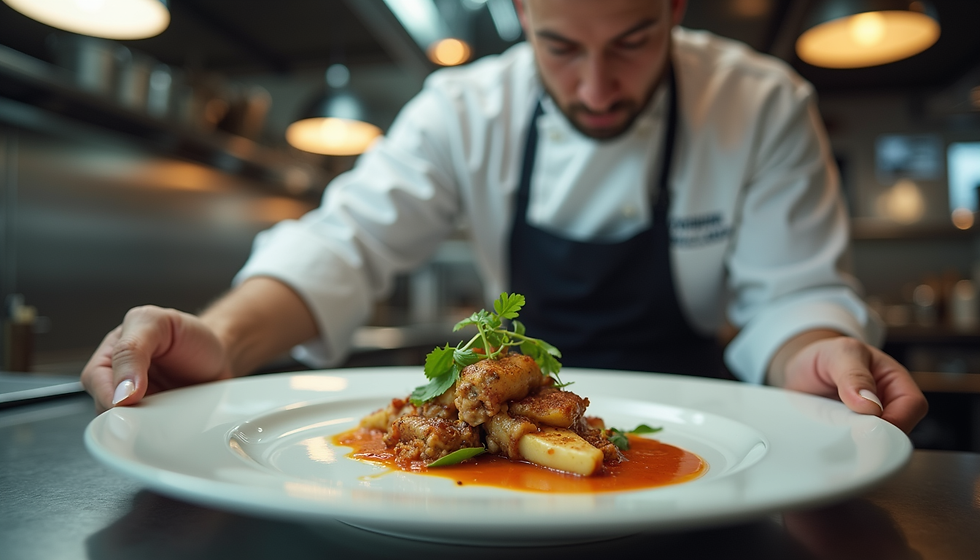
A stunning visual portfolio is absolutely non-negotiable. HNW clients are surrounded by the highest standards of presentation in every part of their lives, and your food must reflect that. I’m not talking about trendy, rustic shots; think clean, elegant photography that showcases your technical skill.
If you can, invest in a professional photographer. If not, learn the fundamentals yourself. Focus on brilliant natural light, clean backdrops, and plating that lets the quality of the ingredients shine. Your photos should communicate freshness, artistry, and a meticulous attention to detail. This is the visual proof that backs up every claim on your CV.
You can learn more about how to plate and present incredible meals with our guide on achieving fine dining at home.
Selling an Experience Through Menus
Your sample menus are another deal-maker. Don't just list dishes; write descriptions that sell an entire experience. Use evocative language that pulls the reader in, engages their senses, and hints at the story behind each ingredient.
This is also your chance to show you’re in tune with current client expectations. For example, over 65% of private chefs in the UK now prioritise locally sourced, seasonal ingredients. This isn't just a trend; it's a reflection of the growing demand for sustainable and wellness-focused dining. Highlighting your commitment to these practices on your menus shows you understand and align with modern luxury values. You can find more insights on this from my friends over at Achieve Hospitality.
Where to Find the Best Private Chef Opportunities
Let's be honest. The most incredible private chef jobs in the UK—the ones that are genuinely life-changing—almost never appear on mainstream job boards. Forget scrolling through Indeed. These roles are filled quietly, through trusted networks and specialist recruiters who live and breathe discretion.
If you want to land one of these opportunities, you need to get inside those circles. It’s all about looking beyond the usual channels and starting to build proper connections with the right people.
Partnering with Specialist Recruitment Agencies
Your first and most direct route is through a specialist domestic staff or private chef recruitment agency. These aren't your typical high-street recruiters; think of them more as gatekeepers to the world of high-net-worth households. Their entire business is built on trust and an encyclopaedic knowledge of what their elite clients are looking for.
Getting onto their books requires a polished and professional approach. As we've already covered, your portfolio and CV need to be immaculate. When you first make contact, treat it as seriously as a formal interview. Be crystal clear about your culinary skills, your salary expectations, and exactly what you're looking for in your next position.
What do these recruiters want to see in a chef?
Professionalism and Responsiveness: They need to know you're dependable. That means answering emails promptly and being completely organised from the get-go.
Honesty About Your Experience: Don't be tempted to embellish your CV. A good recruiter's job is to find the perfect role for your actual skill set, so be upfront.
Flexibility and Patience: The dream job might not pop up tomorrow. Building a solid relationship with an agency is a long game, but it’s one that pays off.
Think of a specialist recruiter as your professional agent. They're in your corner, ready to advocate for you, but only if they have complete confidence in your skills and professionalism. Make their job easy, and they'll work tirelessly to place you in a fantastic role.
For a deeper dive into how these agencies operate, check out our guide on hiring with confidence through domestic staff recruitment agencies. Understanding their perspective gives you a huge advantage.
The Power of Discreet Networking
Beyond the agencies, many of the very best jobs are filled by word-of-mouth. This is where your own network becomes your most valuable asset. You need to connect with the other professionals who serve HNW individuals—these are the people who hear the whispers about new openings first.
This isn’t about just handing out business cards at industry events. It’s about building genuine, professional relationships with the key gatekeepers.
Family Office Managers: These individuals are the operational core for wealthy families, managing everything from finances to household staffing. A personal recommendation from a family office manager is like gold dust.
Luxury Concierge Services: Companies providing lifestyle management for the super-rich are constantly tasked with finding top-tier chefs for their clients, for both permanent roles and one-off assignments.
Yacht Brokers and Private Jet Charter Companies: The people in these industries are in direct contact with your target clientele every day. They are often the first to know when a staffing need arises on an estate or aboard a vessel.
Making that initial connection can be as simple as a polite, professional introductory email. Briefly outline your expertise, attach your portfolio, and explain that you are selectively exploring new long-term opportunities. Let them know you'd be grateful to be kept in mind. This subtle, confident approach is far more impactful than a hard sell.
Decoding Your Salary and Employment Contract
Let's talk about the bit that everyone's interested in: the money. Figuring out your worth in the private chef world isn't as straightforward as in a restaurant with set pay grades. Your salary is a moving target, influenced by your background, where the job is, and exactly what the client needs from you.
Before you even think about negotiating, you need to walk into that conversation armed with solid numbers. Guesswork won't cut it.
What Can You Realistically Earn?
In the UK, private chef pay packets vary wildly. A chef just starting out in a private household might see a salary between £35,000 and £45,000 in 2026. On the other hand, a seasoned pro with a stellar reputation and a portfolio to match can easily command anywhere from £65,000 up to £85,000, and sometimes even more for the most demanding roles.
Geography plays a huge part. As you'd expect, London and the Home Counties carry a significant premium, often paying 15-25% higher than roles in other parts of the UK.
And then there are the live-in jobs. If accommodation is part of the deal, that’s a massive perk you need to account for. A good rule of thumb is to value that accommodation at an additional £12,000-£18,000 a year on top of your gross salary. It's a significant boost to your overall package. For a deep dive into the numbers, the folks at Lighthouse Careers have a brilliant guide to private chef salaries.
Private Chef UK Annual Salary Guide 2026
To give you a clearer picture, here’s a breakdown of what you can expect for a live-out role based on your experience and location. Think of this as a starting point for your own research.
Experience Level | London & Home Counties Salary | Other Major UK Cities Salary | Live-In Accommodation Value (Additional) |
|---|---|---|---|
Junior Chef | £40,000 – £50,000 | £35,000 – £45,000 | £12,000 – £15,000 |
Mid-Level Chef | £50,000 – £65,000 | £45,000 – £55,000 | £14,000 – £16,000 |
Senior/Head Chef | £65,000 – £85,000+ | £55,000 – £70,000+ | £15,000 – £18,000+ |
These figures are a good benchmark, but remember that unique skills, specialist dietary knowledge, or experience on yachts can push these numbers even higher.
Don't Just Skim Your Contract—Scrutinise It
Your employment contract is so much more than a salary figure. It’s the rulebook for your entire working relationship, and you need to read every single line before you even think about signing. This document is there to protect both you and your employer, so get familiar with it.
Here are a few clauses I always tell chefs to pay extra attention to:
Non-Disclosure Agreement (NDA): This is a given in almost any High-Net-Worth household. It’s a legal promise to keep the family’s private life just that—private. Make sure you understand exactly what it covers and for how long.
Social Media Policy: Most clients will have a zero-tolerance policy on this. Expect clauses that strictly forbid you from posting photos of the property, the family, or even the food you cook. It's their home, not your Instagram backdrop.
Hours of Work and Overtime: Get this crystal clear from the outset. What are your core hours? What does a typical week look like? Most importantly, how is overtime handled? Is it paid, or is it time off in lieu? Vague terms here can lead to serious burnout.
Holiday and Sickness Entitlement: Check that your holiday allowance meets the UK statutory minimum, which is currently 28 days (this can include bank holidays). Also, be clear on the sick pay policy.
Knowing Your Worth and Asking For It
When that offer finally comes in, don't be afraid to negotiate. If the salary is a touch lower than you’d hoped but the job feels like a perfect fit, think about other benefits you could ask for. Could they offer a better food budget? Perhaps they'd invest in a professional development course for you, or maybe you could negotiate an extra week of holiday.
Remember, your contract sets the precedent for your entire employment. A clear, fair, and comprehensive agreement is the foundation for a successful and long-lasting professional relationship.
Getting to grips with the numbers and the legal bits gives you the confidence to chase roles that don't just get you excited creatively but also reward you properly. For a bit more on this, I've written before about why salary transparency is key in recruitment conversations.
Your Questions About Private Chef Jobs Answered
Jumping from restaurant kitchens into the world of private service throws up a lot of questions—the kind that job descriptions never seem to answer. You've got the culinary chops, no doubt. But success in these roles often hinges on understanding the day-to-day realities and the unwritten rules of the game.
So, let's get straight to it. Here are the real-world answers to the questions I hear most from chefs thinking about making the switch.
What Is the Difference Between a Private Chef and a Personal Chef?
Good question, and one that trips a lot of people up. While the terms get thrown around interchangeably, there's a crucial difference.
A private chef is usually employed full-time by one person or a single family. You become a dedicated, core member of their household staff, and your entire focus is on them. Think of it as being the head chef of a one-table restaurant that's open 24/7.
A personal chef, on the other hand, is more of a freelancer. They juggle multiple clients, perhaps doing weekly meal prep for one family, catering a small dinner party for another, and cooking for someone else on specific days. This guide is all about landing those full-time private chef jobs UK households are looking for—roles that demand a much deeper level of commitment.
How Important Is a DBS Check?
It’s completely non-negotiable. A Disclosure and Barring Service (DBS) check is an absolute must-have for pretty much any private household job in the UK. You’re being invited into the inner sanctum of a family's home, often working around their children and their most personal moments. Trust is everything.
Having a clean, current DBS check ready to show before you even apply is a massive green flag for any serious agency or client. It tells them you're a professional who gets it, you understand the need for security, and it massively speeds up the hiring process.
Honestly, think of it as part of your standard kit, right alongside your best knives.
What Should I Expect During a Cooking Trial?
The cooking trial is the real interview. It’s about so much more than just what’s on the plate. Most of the time, you'll be asked to plan a multi-course menu, go out and source all the ingredients yourself, and then cook and serve the meal in the client's own kitchen.
What they're really watching is your entire professional conduct:
Organisation and Cleanliness: How do you work in their space? A tidy, methodical approach is vital. They don't want to see chaos in their kitchen.
Adaptability Under Pressure: What if the oven runs cool or you can't find a key ingredient? They want to see you solve problems calmly, not panic.
Professional Presence: How do you interact with them and any other staff? Your ability to be discreet, respectful, and almost invisible when needed is paramount.
Always, always ask for clear guidelines beforehand. Get the lowdown on dietary needs, allergies, strong dislikes, and the budget you're working with. Remember, your conduct is being watched just as closely as your cooking.
Do I Really Need a Car for Most Roles?
For the vast majority of private chef jobs UKwide, especially anywhere outside of central London, the answer is a hard yes. It's a simple logistical reality. Most high-net-worth estates and large family homes are tucked away in rural or suburban spots with patchy, if any, public transport.
More importantly, a huge part of your job is hunting down the absolute best ingredients. That often means driving out to specialist suppliers—we're talking local farms for produce, exclusive butchers for rare cuts, and coastal fishmongers for the freshest catch. You simply can't do that without your own transport. A full, clean UK driving licence isn't just a bonus; it's a standard requirement for almost every top-tier role.
Ready to create unforgettable dining experiences? Chef Andy B offers discreet, professional private chef services across the UK and for extended international residencies. Discover how true luxury hospitality can transform your home by visiting us at https://www.chefandyb.com.
Private Chef Oxfordshire, Private Chef London, Private Chef Hampshire, Private Chef Berkshire, Private Chef Surrey. Private Chef, Personal Chef
keonhacai dạo này thấy bạn bè nói hoài nên mình cũng ghé thử cho biết, chủ yếu xem giao diện chứ chưa đọc sâu. Vào cái là thấy trang làm khá “dễ thở”, khoảng trắng vừa đủ nên nhìn không bị rối mắt. Mình thích kiểu họ chia nội dung thành từng khối rõ ràng, lướt xuống vẫn biết mình đang ở phần nào chứ không bị trôi tuột. Với lại mấy bảng thông tin trình bày theo cột nhìn gọn, chữ không quá nhỏ nên đọc lướt cũng ổn. Mình bấm qua lại vài mục thì thấy menu đặt ngay chỗ dễ thấy, chuyển trang nhanh, không phải tìm vòng vòng. Nói chung chỉ xem sơ thôi mà cảm…
Bài viết dễ theo dõi, đọc mạch lạc nên mình hiểu ý tác giả ngay, cảm ơn bạn đã chia sẻ. Dạo này mình hay để ý cách các nền tảng giải trí online sắp xếp giao diện, chủ yếu xem họ chia mục và hiển thị thông tin ra sao chứ không soi từng trò. Mình cũng gom lại vài ghi chú và hình dung bố cục cho tiện xem lại, ai quan tâm thì ghé https://skitterphoto.com/photographers/3103147/soicauxsmbpro