


Private chef jobs england: 2026 Guide to High-Paying Roles
- Camila Torres
- Mar 10
- 13 min read

If you're a talented chef feeling the burnout from the relentless pace of restaurant kitchens, I’ve got some good news. The world of private chef jobs in England isn't just growing; it's absolutely booming. High-net-worth households are increasingly swapping restaurant reservations for a bespoke dining experience at home, and they need a skilled Private Chef to make it happen.
The Booming Market for Private Chefs in England

The entire landscape for culinary careers in England is changing. I’m seeing more and more discerning clients move away from the public dining scene to hire a private chef, creating a really robust market for those of us who can deliver a true luxury home dining experience.
This isn't just a feeling; the numbers back it up. The UK's personal chef services market is already a powerhouse, bringing in a massive USD 607.0 million in 2024. And it's not slowing down.
To give you a clearer picture, I've put together a quick summary of the market's trajectory based on recent industry analysis.
UK Private Chef Market Growth At a Glance (2024-2030)
Metric | Value/Insight |
|---|---|
Current Market Revenue (2024) | USD 607.0 million |
Projected Market Value (2030) | USD 873.6 million |
Compound Annual Growth (CAGR) | A steady 6.5% from 2024 to 2030 |
Key Growth Driver | Increasing demand for personalised, in-home luxury dining experiences |
Top Client Segment | High-Net-Worth Individuals (HNWIs) and families |
As you can see, the opportunity is significant and sustained. This isn't a fleeting trend; it’s a fundamental shift in how the wealthy choose to dine and entertain. For a full breakdown, you can explore the complete market analysis on Grand View Research.
Key Demand Hotspots and Client Expectations
While you can find great opportunities across the country, the demand is definitely concentrated in a few affluent hotspots. If you're serious about finding a role, these are the places to focus your search:
Private Chef London: Unsurprisingly, the capital is the epicentre. It has the highest concentration of clients looking for everything from full-time residential chefs to one-off dinner party chef specialists.
The Home Counties: Think sprawling private estates and wealthy families. Areas like Private Chef Surrey, Private Chef Berkshire, and Private Chef Oxfordshire are prime hunting grounds for long-term, rewarding positions.
Hampshire: With its gorgeous mix of countryside manors and exclusive coastal properties, a Private Chef Hampshire can find some truly unique and prestigious roles.
What I've learned is that clients aren't just looking for a good cook. They want a discreet, trusted professional who can deliver a completely bespoke service, manage everything from intimate family meals to catering for special occasions, and seamlessly adapt to the rhythm of a private household.
For so many chefs I know, making this move is a genuine lifestyle upgrade. It's a chance to step away from the line and into a more creative, personal, and financially rewarding career. The focus shifts from volume to impeccable quality and building real relationships. If you're curious about where things are heading, you might find our article on the future of the private chef industry an interesting read.
Where to Find High-Caliber Private Chef Roles

If you're serious about landing a top-tier private chef job in England, forget scrolling through the usual job sites. The best roles—the ones with fantastic families, incredible kitchens, and proper compensation—are almost never advertised publicly.
These opportunities are filled quietly, through trusted networks and specialist recruiters who know the world of private households inside and out. A smart private chef booking is rarely made through generic hospitality sites, which will just leave you sorting through restaurant gigs and low-ball offers. Your search needs to be smarter and far more targeted to connect with the right principals and family offices.
Partnering with Specialist Recruitment Agencies
Think of specialist recruitment agencies as the gatekeepers to the most exclusive private chef roles. They aren't your typical high-street recruiter; their entire focus is on placing professionals like us into private homes and estates. These are the people with direct lines to high-net-worth clients looking to hire a private chef in hotspots like Private Chef London and Private Chef Surrey.
When you get in touch with an agency, treat it like the start of a partnership. Be upfront about your experience, what you’re looking for in a role, and your salary expectations. They want to work with chefs who are professional, organised, and communicate clearly. If you want to really get into the weeds on this, I've put together our guide to chef staffing agencies for private residences that breaks it all down.
Leveraging Your Professional Network
I can't stress this enough: your network is your single greatest asset in this game. So many of the best jobs are filled through word-of-mouth recommendations long before an agency even gets the brief.
Chefs & Colleagues: Keep in touch with the great chefs, sommeliers, and managers you've worked with. You'd be surprised how many have connections in the private world or make the move themselves.
A Polished LinkedIn: Get your LinkedIn profile looking sharp. It should showcase your skills, your personality, and your culinary style. Start connecting with estate managers, PAs, and family office staff in key areas like Private Chef Oxfordshire and Private Chef Berkshire.
Your Best Suppliers: The folks who sell you those premium ingredients are often delivering directly to the best private estates. They have their ear to the ground and are a goldmine of information. Let them know you're looking.
Don’t be afraid to make a direct, professional approach. I've seen a Personal Chef land on a principal’s radar simply by sending a polished portfolio and a thoughtfully written email to the estate manager of a property in an area like Private Chef Hampshire.
This isn't just about finding a job; it’s about actively building your career. When you network this way, you position yourself as a serious professional in the world of bespoke dining experiences and luxury home dining.
Crafting a Portfolio That Attracts Elite Clients

Let’s be honest. Your skills in the kitchen are world-class, but that alone won’t land you the top private chef jobs in England. In this world, your portfolio is your handshake, your pitch, and your promise all rolled into one. It’s what gets your foot in the door of the most exclusive households.
High-net-worth clients aren't just looking to hire a private chef. They're investing in an experience. They want someone who brings artistry, discretion, and a flawless understanding of what a true bespoke dining experience feels like. Your portfolio needs to scream that from the very first page.
More Than a CV: Tell Your Culinary Story
First things first: tear up your old restaurant CV. A list of previous employers and duties is meaningless to a private client. You need to translate your experience into a narrative that resonates with a household, not a head chef.
Think about it from their perspective.
Showcase Personalisation: Instead of "created daily specials," talk about how you "designed personalised menus for discerning guests with complex dietary needs."
Emphasise Trust and Discretion: Have you worked for high-profile people before? Mention your experience in "sensitive private environments where professionalism and client privacy were paramount."
Highlight Your Management Skills: Running a private kitchen is about more than just cooking. Frame your experience with suppliers and budgets as "managing all kitchen logistics, from sourcing artisan ingredients to executing flawless event catering services."
The goal is to reposition yourself. You’re not just a cook; you’re a culinary director for a private home, capable of handling everything from an intimate family meal to a large-scale celebration.
A Picture Is Worth a Thousand Bookings
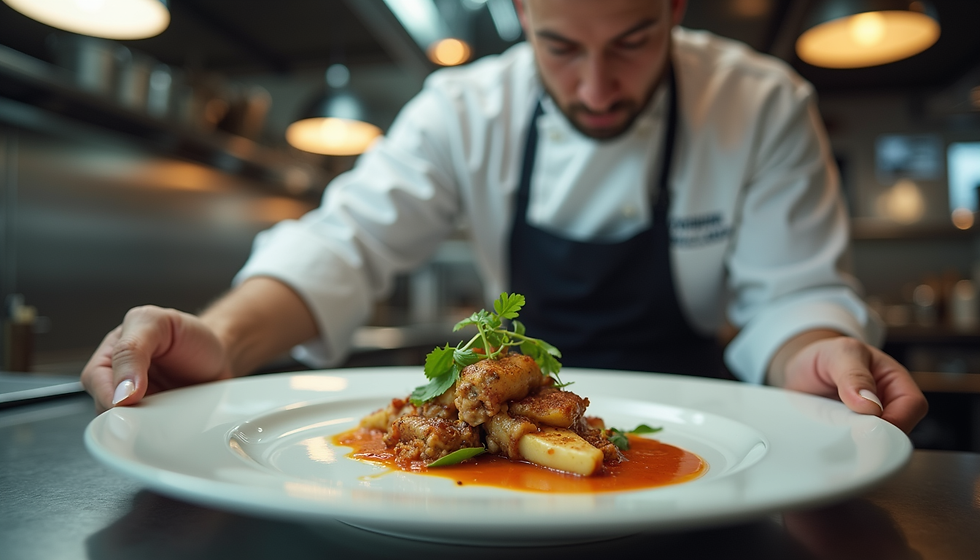
I can’t stress this enough: grainy phone pictures are the kiss of death. In this industry, clients absolutely eat with their eyes first. Your portfolio needs to be filled with stunning, professional-quality photos of your dishes.
If you can, hire a food photographer. If not, invest some time learning about food styling, lighting, and composition. Your photos need to tell a story of your range and style—from elegant canapés and perfectly plated mains to show-stopping desserts.
A potential client should be able to look at your portfolio and instantly imagine your food on their dining table. It’s not just about showing what you can cook; it’s about showing how you can elevate their lifestyle.
Turn Your Menus into an Experience
Your sample menus are where you can really let your personality shine. Don't just give them a list of ingredients. Use evocative, descriptive language that makes them taste the dish before they’ve even met you. This is a massive part of delivering professional catering.
Let me show you the difference. Which one sounds more appealing?
The Boring List:
Starter: Scallops with pea purée
Main: Lamb rack with potatoes
Dessert: Chocolate fondant
The Unforgettable Experience:
Starter: Hand-Dived Orkney Scallops, pan-seared to perfection, resting on a vibrant purée of fresh English peas with mint oil and crispy pancetta.
Main: Roasted Rack of New Season Lamb with a rosemary and garlic crust, served with buttery fondant potatoes, heritage carrots, and a rich red wine jus.
Dessert: Warm Valrhona Chocolate Fondant with a liquid centre, paired with homemade salted caramel ice cream and a sharp raspberry coulis.
See the difference? That level of detail shows your commitment to quality and your flair for creating the kind of exceptional luxury dining experiences for exclusive clients they're looking for. It's a skill that's in high demand; bookings for catering for special occasions shot up by 25% year-over-year in 2023. Clients want chefs who can make their special moments truly unforgettable.
Mastering the Interview and Cooking Trial
You’ve built a killer portfolio and networked your way to the final stage. This is it. The interview and cooking trial are where you seal the deal for the best private chef jobs in England. It’s your chance to prove you’re not just a great cook, but the discreet, adaptable professional they need in their home.
Forget everything you know about standard restaurant interviews. Here, it’s less about your technical prowess—they’ve seen that in your portfolio—and more about your personality, your mindset, and whether you understand the unique rhythm of a private household. They need to feel comfortable with you on a personal level.
Acing the Private Chef Interview
The interview is where you show your professional maturity. They already know you can cook; now they need to know if you can fit seamlessly into their life and home.
I’ve seen chefs bomb this part by talking too much about food. You need to be ready for questions that get to the heart of what it means to work in a private space:
Adaptability: "The client has just called. They want to completely change tonight's menu for eight guests. What do you do?"
Discretion: "Can you give me an example of a time you handled a sensitive situation in a previous role without giving away any private details?"
Sourcing: "If you were based with us in Oxfordshire, where would you source the best local produce for a simple family meal?"
Household Dynamics: "How do you see yourself working alongside the existing household staff?"
Your answers need to be calm, confident, and always circle back to making the client’s life easier. Show them you’re a problem-solver who values their privacy above all else. This isn't just about food; it's about service.
The Ultimate Performance: The Cooking Trial
Now for the main event. The cooking trial is where you bring your beautiful portfolio to life. This is where you don’t just show off your culinary skills, but also your impeccable organisation, cleanliness, and grace under pressure in a kitchen that isn’t yours.
The brief might come from the client or an agency, usually with a budget and a deadline. It's a real-world test. For a look at how clients put these briefs together, check out our guide on how to write a detailed chef job description.
Your menu should be thoughtful. It needs to be elegant and impressive, but not so ridiculously complex that you risk things going wrong in an unfamiliar kitchen. I always advise planning a menu that travels well and doesn't require a lot of high-stress, last-minute plating.
Think of it as running a one-night-only pop-up in someone’s home. Meticulous planning is your best friend.
Plan for the Unknown: You have no idea what you’ll find in their kitchen. Always bring your own essential kit: sharp knives, a digital scale, a thermometer, and any other smalls you can’t live without.
Prep Intelligently: Do as much prep off-site as you can without compromising the final quality. This minimises the time you spend in their space and the mess you make.
Source Impeccably: This is your chance to show off your little black book of suppliers. Choose ingredients that scream quality and seasonality. It tells them you know your stuff.
Remember, the trial isn't just a taste test. They’re watching your every move—how you work, how you clean as you go, and how quietly you operate. The goal is to deliver a perfect bespoke dining experience and leave their kitchen looking like you were never even there.
That’s how you win the trust of clients in London, Surrey, and beyond.
Decoding Private Chef Salaries and Rates in England
Right, let’s get down to the brass tacks: the money. Honestly, understanding what you should be earning is the most powerful tool you have when looking for private chef jobs in England. Walking into a salary chat unprepared is like trying to nail a complex sauce with no recipe – you might get something, but it probably won't be what you were hoping for.
Knowing your worth gives you the confidence to talk numbers, whether you're after a full-time role or a one-off freelance gig. The pay for a permanent job on a country estate versus a single dinner party chef booking can be worlds apart, and it all comes down to your experience, what the job demands, and, of course, where it is. Understanding private chef prices UK is key.
Typical Salary Bands for Full-Time Roles
It's simple: the more experience you have, the more you can earn in a full-time private chef role. There are clear tiers in the market, and you'll often find that salaries are beefier in hotspots like Private Chef London and Private Chef Berkshire. This just reflects the higher cost of living and the sheer concentration of high-net-worth clients.
If you're just making the jump from a restaurant kitchen, you can still expect a decent starting salary. A Private Chef who already has a few years of private household experience under their belt can command much more, as they've proven they can handle the unique demands of this world. At the very top, seasoned chefs with stellar reputations can pull in salaries that are well into six figures.
Here’s what you can realistically expect based on recent data:
Entry-Level (New to Households): Annual salaries typically fall between £35,000 to £45,000.
Mid-Level (Experienced): You'll be looking at a range of £45,000 and £65,000.
Senior/Executive Chef: It’s common to see salaries from £65,000 to £85,000, and often much higher.
Want to see how this stacks up against the wider industry? You can get more insights on landing top UK private chef jobs in 2026.
Pricing Your Freelance Services
When you're freelancing – providing event catering services or working as a personal chef for hire – the model changes. You'll usually charge a day rate, with the cost of all ingredients billed separately to the client. Remember, that day rate isn't just for cooking; it covers your expertise, menu planning, shopping, travel, and the impeccable clean-up that clients expect.
For a freelance personal chef in England, daily rates can vary massively, from £250 to £1,000+. It really depends on the complexity of the event, the number of guests, and how established your name is. The food cost itself is always on top of your fee; this is a standard and non-negotiable part of private chef prices UK.
The hiring journey for these roles is often refreshingly straightforward.

From that first chat to a final offer, every step is designed to make sure it's the right fit for both you and the client. Never be afraid to talk about money. If you need a bit more confidence on this point, have a look at our guide on why salary transparency is key in recruitment.
Answering Your Top Questions About Private Chef Jobs
Switching from the controlled chaos of a restaurant kitchen to the world of private chef jobs in England is a big move. I get it. It brings up a lot of questions, especially if you're used to the brigade system. Let's tackle some of the most common queries I hear from chefs looking to make that leap.
What Are the Essential Legal Requirements for a Private Chef in the UK?
First things first, let's get the legal stuff sorted. To work as a Personal Chef in the UK, a few things are absolutely non-negotiable. You must have the proven right to work here, no exceptions. If you're freelancing as a dinner party chef or for one-off events, you’ll also need to register as self-employed with HMRC.
Public Liability Insurance is crucial—don't even think about stepping into a client's home without it. A Level 2 Food Safety and Hygiene for Catering certificate is the bare minimum, but I always tell chefs to go for Level 3. It just shows clients you're serious. Many roles, particularly those with families, will also require a DBS (Disclosure and Barring Service) check and you'll almost certainly sign a non-disclosure agreement (NDA). Client privacy is everything in this game.
How Do I Transition From a Restaurant Kitchen to a Private Chef Role?
The biggest hurdle isn't the cooking; it's the mindset shift. You're moving from a world of speed and volume to one of complete personalisation and discretion. Your CV needs to reflect this. Forget listing how many covers you did on a Saturday night and instead highlight your experience in bespoke menu design, managing dietary needs, and client communication.
Start building a portfolio of high-quality photos of your best dishes. A brilliant way to get started is by offering your services for a few small, private dinner parties. This will give you vital experience and, just as importantly, those all-important testimonials. In interviews, yes, talk about your food, but spend more time emphasising your organisation, adaptability, and your ability to remain calm and professional in a private home.
The real transition is proving you're more than just a brilliant cook. You need to show you can be a discreet, trusted culinary partner who can deliver a seamless luxury home dining experience, time and time again.
What Do Clients in Affluent Areas Like Surrey and Berkshire Really Look For?
In sought-after postcodes like Private Chef Surrey or Private Chef Berkshire, clients are looking for more than just a great meal. They're looking for a complete professional who slots into their lifestyle and delivers a professional catering service with zero fuss.
Discretion is King: They value their privacy above all else. You see nothing, you hear nothing.
Sourcing Prowess: Your knowledge of where to find the best local, organic, and artisan produce will be a huge selling point.
Ultimate Flexibility: You need to be just as comfortable creating healthy, daily family meals as you are orchestrating a formal dinner party for twenty guests.
Adaptability: The ability to seamlessly move between a Private Chef London city residence and a sprawling country estate in Private Chef Oxfordshire is a massive advantage.
Essentially, they want a chef who can become an indispensable part of their household, anticipating their needs before they even voice them.
How Can I Build Long-Term Relationships With Private Clients?
Lasting relationships in this business are built on trust, consistency, and a talent for quietly exceeding expectations. It all starts with crystal-clear communication about menus, schedules, and really digging deep to understand a client’s preferences.
Learn their favourite dishes, memorise their kids' allergies, and always be punctual and reliable. But if I could give you one single piece of advice, it would be this: leave the kitchen absolutely immaculate after every single service. By providing a consistently brilliant and stress-free service, you become invaluable. The goal is to make the client feel they simply can’t imagine their household running without you.
Private Chef Oxfordshire, Private Chef London, Private Chef Hampshire, Private Chef Berkshire, Private Chef Surrey. Private Chef, Personal Chef
#privatechef #personalchef #luxurydining #chefsofinstagram #privatechefservices #hireaprivatechef #chefslife #finecuisine #gourmetfood #privatecatering #eventcatering #foodphotography #chefstable #dinnerpartychef #ukprivatechef #bristolchef #luxuryevents #foodstagram #instafood #chefskills
Comments